The cheapest way to heat a home is not the system with the cheapest fuel. It is the one that delivers a unit of heat for the least money, after efficiency is counted. A kilowatt hour of electricity looks expensive until a heat pump turns it into three kilowatt hours of warmth. Here is the full ranking for 2026, worked out for the UK, the US and Germany from official price data.
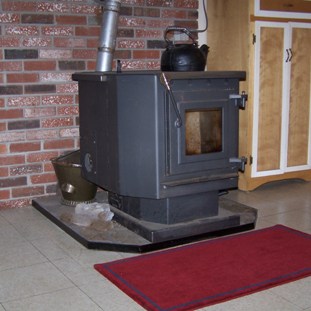
Photo: Edgewise, Wikimedia Commons
The only number that matters: cost per unit of heat
Every heating system buys energy in one form and delivers heat in another. Dividing the fuel price by the system's efficiency gives the true cost per kWh of heat. Heat pumps are rated by seasonal performance factor (SPF) or COP, meaning how many units of heat come out per unit of electricity in. Boilers lose 5 to 15 percent of their fuel up the flue. Direct electric heating is 100 percent efficient and still the most expensive option almost everywhere, because the fuel itself costs so much.
United Kingdom: cost per kWh of heat (October 2026)
| Heating method | Cost per kWh of heat | Notes |
|---|---|---|
| Wood pellets, bought in bulk | about 4 to 5p | Cheapest fuel, but needs storage space and a pellet boiler or stove |
| Heat pump on a heat pump tariff | about 6.5p | At roughly 18.7p per kWh and SPF 2.9 |
| Gas boiler | about 8.9p | Price cap gas at 7.97p per kWh, 90 percent efficiency |
| Heat pump on a standard tariff | about 9.1p | Price cap electricity at 26.32p per kWh, SPF 2.9 |
| Heating oil boiler | about 10.5p | Price swings with the oil market |
| Log stove | about 10.7p | Cheaper if you cut and season your own wood |
| Direct electric heaters | 26.3p | The most expensive way to heat a whole home |
United States: cost per kWh of heat (winter 2026/27)
| Heating method | Cost per kWh of heat | Notes |
|---|---|---|
| Gas furnace | about 4.7 cents | Gas at $13.44 per thousand cubic feet (EIA), 95 percent AFUE |
| Heat pump | about 5 to 6 cents | Electricity at 18.23 cents per kWh, COP 3.0 to 3.5 |
| Wood pellets | about 6 to 7 cents | Around $300 per ton, needs a pellet stove |
| Propane furnace | about 11 cents | Propane at $2.52 per gallon (EIA winter forecast) |
| Heating oil boiler | about 15 cents | Oil at $5.26 per gallon (EIA winter forecast) |
| Electric resistance | about 18 cents | Baseboards and electric furnaces |
The EIA's winter outlook shows what this means in practice: this winter it expects the average gas heated home to spend about $640 on heat, against about $1,246 for propane, $1,196 for electric heating and $2,115 for oil.
Germany: cost per kWh of heat (2026)
| Heating method | Cost per kWh of heat | Notes |
|---|---|---|
| Wood pellets | about 7 cents | Around €300 per tonne |
| Heat pump | about 11 to 12 cents | Electricity 34.9 to 38.0 cents per kWh, SPF 3.2 |
| Gas boiler | about 12.9 cents | Gas at 11.58 cents per kWh (Destatis), 90 percent efficiency, and the CO2 price is rising |
| Direct electric heating | about 38 cents | Never a sensible whole home choice |
The ranking, in plain words
If you have mains gas in the US, a modern gas furnace is still the cheapest mainstream way to heat, with a heat pump close behind and ahead in mild climates. In the UK, a heat pump on the right tariff beats gas, and anything beats oil and direct electric. In Germany, the heat pump already beats the gas boiler on running cost at average prices, before grants are counted. Everywhere, wood pellets are the cheapest fuel per unit of heat if you have the storage and do not mind the work, and direct electric heating is the most expensive option by a wide margin.
Cheap fuel is not the whole story
Three warnings before you rip anything out. First, installation cost: a pellet boiler or heat pump costs far more to install than a like for like boiler swap, so the running cost saving has to be weighed over ten years, not one winter. Second, tariffs matter as much as technology: the same UK heat pump costs 9.1p or 6.5p per unit of heat depending purely on the electricity tariff. Third, the cheapest heating upgrade of all is needing less heat. Loft insulation, draught proofing and thermostatic radiator valves cut the bill of every system on this page, and they are the first spend in almost every case.
Frequently asked questions
What is the cheapest way to heat a home in 2026?
Per unit of heat, bulk wood pellets are cheapest in the UK and Germany, and natural gas is cheapest in the US. Among mainstream whole home systems, a heat pump on a good tariff is the cheapest option in the UK and Germany, and a gas furnace in most of the US.
Is electric heating ever the cheapest?
Only through a heat pump, or with off peak storage heating in a small, well insulated flat. Direct electric radiators and fan heaters cost roughly three times more per unit of heat than a gas boiler in the UK and the US.
Why is a heat pump cheaper than the electricity it uses?
It does not convert electricity into heat, it uses electricity to move heat from the outside air into your home. Measured over a season, real systems deliver about 2.8 to 3.4 units of heat per unit of electricity, which divides the electricity price by the same factor.
Sources: Ofgem price cap October to December 2026; US EIA Winter Fuels Outlook, October 2026; Destatis household energy prices, first half 2026; Nottingham Energy Partnership fuel cost comparison; Fraunhofer ISE heat pump field study 2025. Figures checked October 2026.