Underfloor heating costs between £50 and £85 per square metre installed in the UK for an electric system, and between £85 and £135 per square metre for a wet system in a new build, with prices checked in October 2026. A wet retrofit costs more, typically £95 to £110 per square metre, and some installers quote up to £185. The system you choose, and whether your floor is already coming up, matters more than the size of the room.
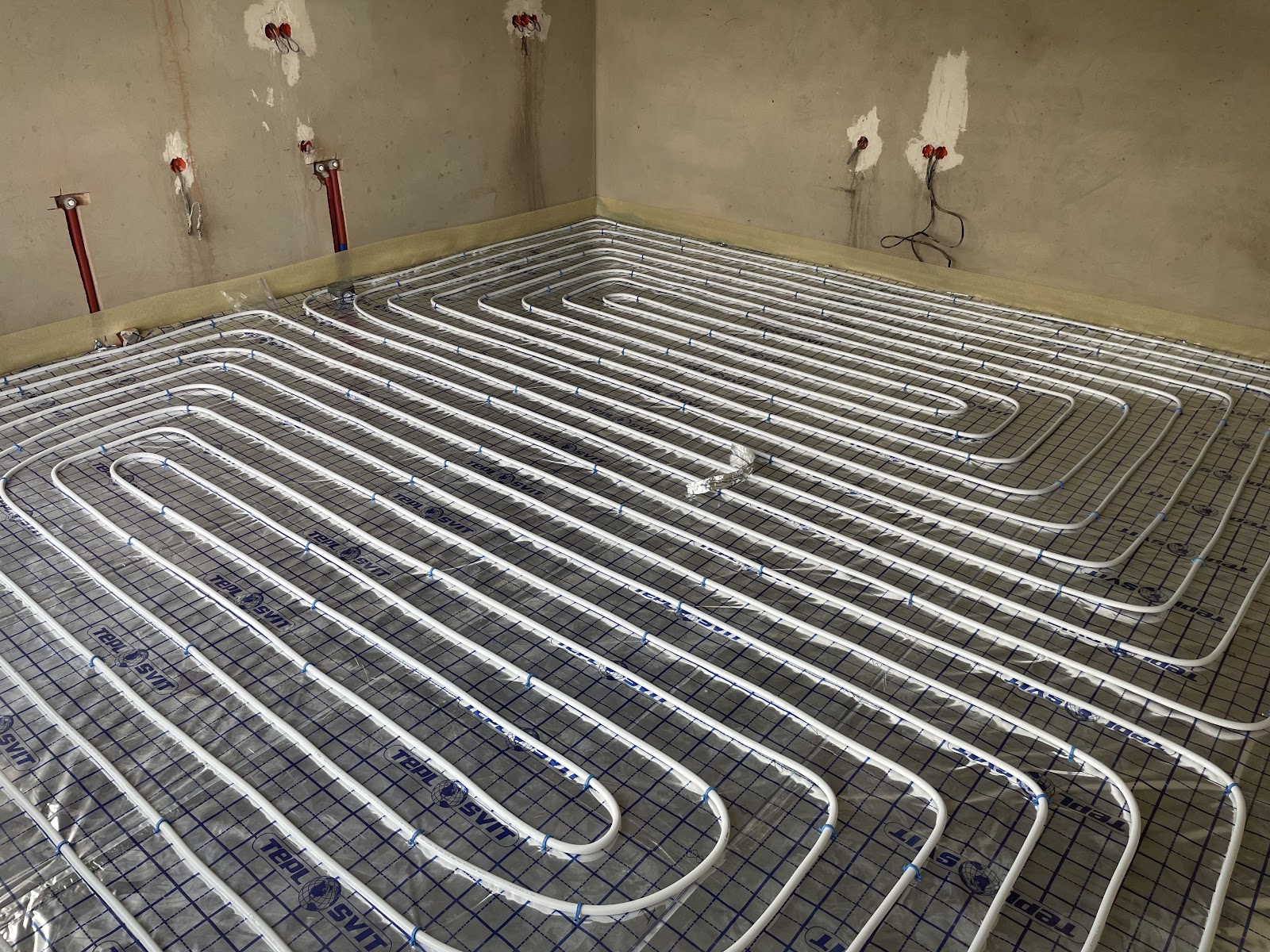
Photo: Viii23dawari, CC BY-SA 4.0
A 20 square metre living room, priced out
Take a typical living room of 20 square metres. An electric system fitted as a retrofit costs about £1,200 to £1,700, at £60 to £85 per square metre. A wet system in the same room costs about £1,900 to £2,200 retrofitted, and about £1,700 to £2,000 in a new build. Those rates come from Checkatrade, and the electric range is backed by MyBuilder at £50 to £85 per square metre.
Other installers quote higher for wet retrofits. MyBuilder puts them at £135 to £185 per square metre, which would price our room at £2,700 to £3,700. The gap is usually what is included: insulation boards, the manifold, the boiler connection, and screed work. Ask what is in the price, and get it in writing.
A small bathroom is the cheapest way in. A 4 square metre bathroom with an electric mat costs roughly £300 to £600 installed, according to Boiler Central and HGN Bathrooms, including the thermostat. A thermostat with a floor sensor costs £80 to £250. The mat itself is only £35 to £50 per square metre for materials.
Wet or electric: the two systems, side by side
A wet system circulates warm water through plastic pipes under the floor, fed by a boiler or a heat pump. An electric system lays heating mats or cables under the floor finish and warms them with electricity. Wet costs more to install and far less to run. Electric costs little to install and a lot to run. That trade is the decision.
| Electric, new build | Electric, retrofit | Wet, new build | Wet, retrofit | |
|---|---|---|---|---|
| Cost per square metre | £50 to £75 | £60 to £85 | £85 to £135 | £95 to £185 |
| Best for | Small rooms | Bathrooms, kitchens | Whole house | Renovations |
Wet systems run at 35 to 45 degrees, against 60 to 70 degrees for radiators, and that low temperature makes them the natural partner for a heat pump. The Energy Saving Trust notes underfloor heating lets a heat pump run more efficiently than radiators. Our guide to heat pump costs in the US, UK and Germany has the full installation and grant figures.
Electric systems suit a different job. They add almost no height to the floor, they go down in a day, and they need no boiler connection, so they are the obvious choice for a single tiled room. They are a poor choice for a whole house, because electricity costs about three times as much per unit as gas at the October 2026 price cap of 26.32p per kilowatt hour set by Ofgem.
What it costs to run
For our 20 square metre living room, MyJobQuote puts an electric system at £230 to £460 a year and a wet system on a gas boiler at £100 to £200 a year. Renovation Notes agrees, per square metre over a six month heating season: £17 to £23 for electric, £6 to £8 for wet on gas, and £5 to £7 for wet on a heat pump.
| Room, 20 square metres | Electric | Wet, gas boiler | Wet, heat pump |
|---|---|---|---|
| Running cost per year | £230 to £460 | £100 to £200 | £100 to £140 |
Across a whole house the gap widens. Checkatrade puts a full electric system at about £2,646 a year against £1,916 for a wet system or radiators. A wet system also runs cheaper than radiators on the same boiler. Thermondo puts that saving at 10 to 20 percent, and other installers report anything from 4 percent to 25 percent, so treat it as a range, not a promise.
For a bathroom the sums are small enough that running cost stops mattering. A 4 square metre bathroom on an electric mat, heated two hours a day through the winter, adds roughly £35 to £50 to the bill over the season at the October 2026 cap rate. That is a comfort purchase, not a heating decision. Our heating cost calculator compares what each fuel costs per unit of heat in the UK, the US and Germany, if you want to run the same sums for your own home.
The same numbers in the US and Germany
In the US it is sold per square foot, so here are the figures in dollars per square foot, with the per square metre equivalent alongside. In Germany it is priced per square metre, much like the UK, but lower.
| Electric | Wet, hydronic | |
|---|---|---|
| US, per square foot installed | $8 to $15 | $7 to $17 |
| US, per square metre equivalent | $86 to $161 | $75 to $183 |
| Germany, per square metre installed | €20 to €70 | €45 to €135 |
Modernize and Block Renovation both put electric at $8 to $15 per square foot, and hydronic at $7 to $17. A hydronic system also needs a boiler, at $3,200 to $9,000, and a whole house install typically lands between $12,000 and $35,000. A single bathroom with electric mats costs $500 to $1,200 installed.
Germany is cheaper than the UK for wet systems. Enter, a German energy advice service, prices a wet system at €45 to €80 per square metre in a new build and €60 to €105 in a retrofit, while Thermondo puts the range a little higher, at €50 to €110 and €60 to €135. Electric systems cost €20 to €70 per square metre. Preparation, screed and controls can add another €1,600 to €2,500. The BEG scheme can cover 15 to 20 percent of a heating optimisation, and a floor install done alongside a heat pump switch can be included in the wider heat pump funding. There is no equivalent grant for underfloor heating alone in the UK. The Boiler Upgrade Scheme pays toward the heat pump, not the floor.
Installation: the disruption nobody prices in
An electric system in a single room takes about a day to lay, and a bathroom mat takes half a day to a day including the thermostat wiring, according to Boiler Central. A wet system for a whole floor takes 2 to 4 days to install, and then the screed has to dry. Traditional sand and cement screed needs a minimum of 4 to 6 weeks before the heating can be run, according to SoleHeat. Liquid screed is faster, with most switching it on after about a week. Plan for 4 to 6 weeks of total project time for a wet system. Heating a wet screed cracks it.
Retrofitting brings two more costs. The floor gets higher, by 18 to 30 millimetres even with a low profile retrofit system, which means doors, skirting and thresholds need adjusting. And the insulation under the system matters more than the system itself. If a quote does not mention insulation boards, ask where they are.
Which floors and rooms suit it
Tile and stone are the best partners for underfloor heating. They conduct heat well and store it. Engineered wood works too, within the manufacturer's temperature limits, and so do laminate and luxury vinyl plank on low temperature systems. Solid hardwood is the risky one, because it can warp as temperatures change. Carpet is the poorest match, because it insulates against the very heat you are paying for.
Bathrooms and kitchens suit electric mats: small, tiled, used in short bursts, and often renovated anyway. Living rooms and open plan kitchen diners suit wet systems, especially in a new build or extension. Bedrooms divide opinion, because a wet system takes 2 to 3 hours to warm a room from cold.
What to ask before you sign a quote
Get three quotes that answer the same questions.
- Is the per square metre price for materials and labour together, and what is included: insulation boards, manifold, thermostat, screed, boiler connection?
- How much will the finished floor rise, and who adjusts the doors, skirting and thresholds?
- For a wet system, how long before the screed is dry and the heating can be switched on?
- What thermostat and controls are included, and can each room be controlled on its own?
- For a wet system, what does the annual service cost? Budget around £80 to £150 a year.
Get it, or skip it
Get it if you are building, extending or renovating with the floors already coming up. That is when a wet system is cheapest to install and best to run, and the disruption costs you nothing extra. Get it in a bathroom or kitchen being retiled anyway, where an electric mat costs a few hundred pounds. Get it with a heat pump, where the low flow temperature makes an efficient heat source more efficient.
Skip it if your house is finished, your radiators work and nothing else is being done to the floors. Ripping up a good floor to save a little on running costs rarely pays back. Skip it as the main heat for a large room in an all electric home, where the running cost is three times a wet system's. And sort the insulation first. A draughty house will not be fixed by a warm floor. Underfloor heating is a good purchase in the right house at the right moment, and an expensive one anywhere else.